The SPIN-Dementia Network Plus launched almost one year ago, in November 2024. In this blog, the SPIN-D Co-production and Involvement Team share their thoughts and experiences of being involved in SPIN-D, to help enable meaningful involvement be part of all activities, and what they have learned, what worked well, and what they feel could be improved on.
Clare highlighted the value of recording and reviewing the network’s year in co-production and involvement, encouraging members to reflect on their journey from joining SPIN-D to the present. For her, celebrating successes alongside identifying improvement areas sustains hope and progression. Clare’s own reflection centered on the shared ownership of the network’s approach, with everyone contributing knowledge and expertise in a safe, inclusive space. She emphasised the unseen but wide-reaching impact of contributions as members carry learning into other work.

Martin shared that his father’s motto—learning more from mistakes than successes—remains important, warning against only self-praise. He stressed that rural communities are neglected both in wider research and within SPIN-D, with ethnicity receiving more focus. Rural residents, he said, are “out of sight, out of mind,” and this must change.
Cecilia connected with Martin’s point, explaining that her journey has been shaped by a lifetime of mistakes and the lessons they brought. From her first awareness of SPIN-D to the conference experience, she found the work inspiring and energising. As a former carer and professional, she values being recognised for her perspective, despite the personal energy it takes to contribute. Her passion for the cause continues to drive her involvement.

Bettina recounted saying “yes” immediately to joining SPIN-D, despite having no idea what it entailed. As a vocal Black woman, she acknowledged sometimes being seen as a threat for asking difficult questions. Her priority has been engaging the Black community in dementia conversations, especially in Nottingham where she feels progress is slow. She detailed her role in creating a City Council memory pack, her pride in being valued alongside academics, and the many opportunities SPIN-D has opened. Responding to Martin, she noted the lack of research on Black people in rural communities and offered to work with him to address this.

Rachael: I have always thought that co-production is based on values, relationships, making mistakes and learning from these mistakes. It’s not just a transactional set of rules, but something that is created and grows between people. It’s not easy, it can be full of emotion and missteps but it should belong to the people who invest their time and efforts to work together to make a difference. It’s been great to see the openness of how we have all approached co-production in SPIN-D, the willingness to learn from each other and to keep trying to make it a positive experience for everyone. Co-production feels like a golden thread running through SPIN-D, not because it is perfect, but because we all want it to be.
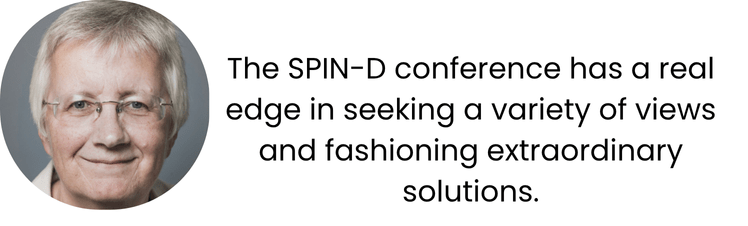
Margaret shared that while still not drawn to ‘SPIN-D’ as a name, she sees clear improvement in inclusiveness. She praised the network’s conference for its diversity of views. It offers creative solutions. She applauded governance improvements. She also flagged challenges in genuinely representing the breadth of lived experience. It’s not easy to manage a dispersed network, but the bar has been raised.

Di echoed Margaret’s praise, noting the diversity and engagement of SPIN-D’s conference. Although she missed it in person, she valued her role in podcasts, which reignited her passion for a dementia-related food project from 2018 which focused on the importance of culturally appropriate dementia care for Liverpool’s ethnic minority communities. With Ruth’s encouragement, she applied to the Dementia Trust for a Dementia Disruptor Award, crediting Clare for prompting her to revisit and share past work.
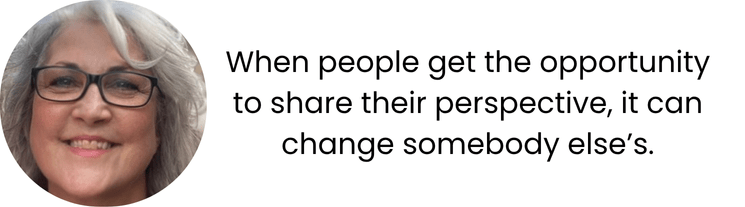
Debra connected with Martin’s comments about learning from mistakes and described her aspiration for authentic involvement. She believes SPIN-D has succeeded in enabling genuine voice and perspective-sharing, which she sees as transformative. She expressed pride in the diversity of the core lived experience group, while noting gaps such as rural and travelling community representation. For her, being part of a respectful, committed group is key.
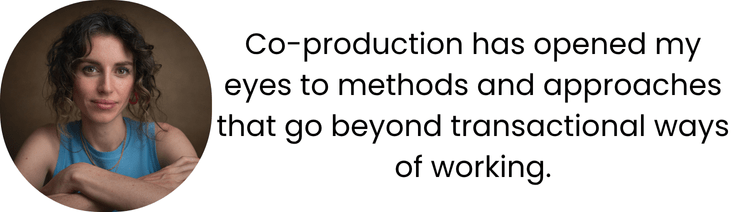
Alice reflected that seeing co-production in action has changed her perspective, making her more aware of collaborative approaches that go beyond merely transactional. She sees potential to apply co-production approaches in other settings, and has joined the UCL Co-Production Collective community. She is interested in how co-production can enhance the network’s communication strategy.
You can learn more about SPIN-Dementia Network Plus co-production approach on our Co-Production and Involvement Resource page.
 spindementianet.org