SPIN-Dementia Network+ Flexible Funding Awardees
Round 1 – Inclusion in Practice
SAFE-D (Supporting & Advancing Falls and Fracture Evidence in Dementia).
Dr Leanne Greene, University of Exeter
Falls, fragility fractures, osteoporosis, and dementia often occur together in older adults, creating a major healthcare challenge in the UK. Fragility fractures—caused by low-trauma incidents like a fall from standing height—affect around 549,000 older adults each year in the UK. People with dementia are at higher risk of these fractures, which can lead to sudden cognitive decline, reduced independence, and increased strain on caregivers.
Fragility fractures cost the NHS over £5.4 billion annually, yet rehabilitation pathways remain inadequate, particularly for those with dementia. Most rehabilitation programs are based on hip fracture research, with little evidence on recovery from other fractures. Additionally, people with dementia are often excluded from these studies, meaning existing recovery plans may not suit their needs. Dementia symptoms can make rehabilitation difficult, highlighting the need for dementia-friendly approaches.
This project aims to improve rehabilitation for people with dementia after a fragility fracture. We will speak with people with dementia and their caregivers—both those who have experienced a fall and those who haven’t—to learn what works and what better rehabilitation should look like.
We will talk to healthcare professionals across Cornwall, Devon, and the Isles of Scilly to understand local rehabilitation services after a fragility fracture. We’ll also look at what helps or makes it harder for people to be referred to support.
Findings will inform research trials, including FRACTURE FRIENDS and MAINTAIN, designed to create more effective post-falls/fracture rehabilitation, ultimately improving recovery and quality of life for people with dementia and caregivers.
My Story, My Future: Empowering people with dementia to document future care needs.
Mrs Martha Pusey, University of Portsmouth
Empowering Decision-Making: Using Storytelling to Support People with Dementia in Future Care Planning.
As cognitive decline of dementia progresses, individuals with dementia often experience reduced insight into their own health and may lack the capacity to make decisions about their care needs, combined with views that people with dementia are no longer seen as capable of making decisions. When people with dementia are admitted into a care home this usually results from carers no longer feeling they are able to cope, or when the person with dementia has been admitted to hospital following a fall and the care professionals think the person would be better supported in a care home. There is no choice for the person with dementia and no say in their care needs and preferences.
This research project will explore how storytelling can help people with dementia in planning their future care and empower individuals with dementia to express their values, preferences, and wishes for future care in a meaningful way before they lack capacity. By sharing personal stories, people can better communicate their needs, and this can enhance person centred care and supported, and care providers can gain deeper insights into individuals’ lives.
This research is using coproduction methods and a conceptual framework designed from a systematic literature review being conducted by Martha as part of her PhD. The research project will involve a diverse membership in an advisory group including people living with dementia, registered care home managers and an expert in future care planning, supporting the development of a storytelling toolkit which empowers decision-making, emotional support, and improving social care planning for people with dementia.
SPEAK: SPEech and language therapy clinic for people with Primary Progressive Aphasia and student Knowledge development.
Dr Anna Volkmer, University College London
People with language-led dementia or ‘primary progressive aphasia’ (PPA) often find themselves waiting years for a diagnosis and unable to access help and support. As the symptoms progress people rely on other people, their spouses, partners and family, to help them with everything. People with PPA and their families become lonely and isolated. Depression and anxiety are common in people with PPA and family members. Speech and language therapy is the main treatment for PPA but isn’t mostly not available. Our lived-experience contributors have previously been told that there were not enough speech and language therapists locally, or those that were there did not know what to do. Our lived-experience contributors have asked us to try out a national speech and language therapy clinic for people with PPA and their family members, staffed by student speech and language therapists. The students will be supervised by an experienced speech and language therapist. This will improve the students knowledge and confidence in this field for the future. The clinic will be hybrid, so that people can attend via video conferencing or in person. We will need computers and therapy materials to set this clinic up. We will measure the benefits of the clinic for people with PPA and their families using measures of communication and quality of life. We will also ask students about changes in knowledge.
Olfaction, ageing and dementia: Building a collaborative network to advance research and innovation.
Dr Federica D’Andrea, University of West London
Olfactory dysfunction (loss/decreased sense of smell) is an invisible impairment that may be a modifiable risk factor for cognitive decline and dementia. It affects over half of people aged 65 and above, and four in five aged 80 and over. People with olfactory dysfunction are at greater risk of cognitive decline, social isolation, and lower quality of life. Those affected may experience reduced control over personal hygiene, increased depressive symptoms, and difficulties with daily routines. It also negatively impacts eating behaviours and increases mortality risk, with people with olfactory dysfunction being over three times more likely to die than those with normal olfaction (smell).
However, due to the regenerative capacity of the olfactory pathway, interventions such as olfactory training may help mitigate age-related olfactory decline and support healthy ageing. Although limited, studies suggest that benefits from olfactory training extend beyond improvements in olfactory function, including enhanced cognition, reduced depressive symptoms, and protection from cognitive decline. Yet, olfactory dysfunction in older people is under-researched, largely undiagnosed and untreated.
With the intention to reduce the risk of dementia and promote healthy ageing, this project aims to advance research and innovation by: (1) Establishing an interdisciplinary network with experts in olfaction, ageing and dementia, including people with lived experience (e.g., people with dementia, family carers, people with olfactory dysfunction), communities, healthcare professionals, charities, industries, and scientific community. (2) Identifying and reaching a consensus on uncertainties, gaps and prioritises to drive this field forward. (3) Formulating objectives for future collaborative projects and funding bids.
My Home, My Garden Story.
Dr David Dobson, University of York
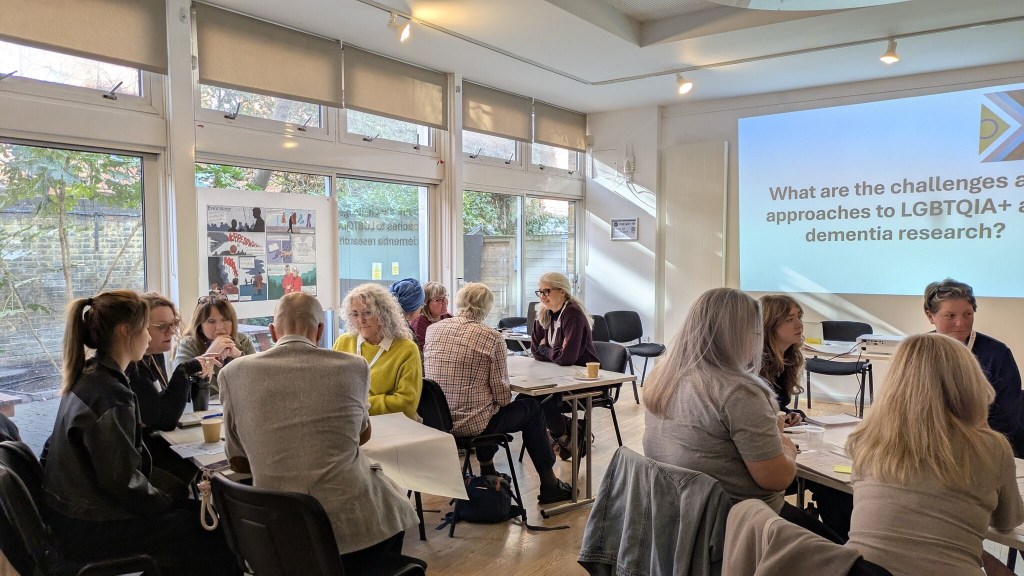
The project extends the knowledge exchange and collaboration remit of an ongoing ESRC project ‘My Home, My Garden Story’ (MHMGS), exploring the role of domestic gardens in the lives of people living with dementia, across Yorkshire and Greater Manchester, and their support networks, including friends, family, neighbours, and professional carers. This project, in consultation with a dementia support group called ‘York Minds and Voices’ (YMV) (part of the Dementia Engagement and Empowerment Project), aims to develop visual garden stories that engage with a person’s garden practices, through ethnographic and creative methods. These stories will inform practice when supporting people living with dementia to access their gardens. In this additional collaborative work we hope to work directly with dementia support groups representing people from under-represented backgrounds, including LGBTQ+ and minoritised ethnic demographics, in order to create consultation panels in Greater Manchester, to work alongside the existing panel in York. These panels will contribute to the process of analysis, and will inform both academic and non-academic outputs, including prompts for relevant professionals such as architects and care providers. We will also work with members of the Manchester groups as participants and develop their garden stories, supplementing the individual household stories developed in the primary project. Key to this extended work is the opportunity to diversify perspectives of people living with dementia, to ensure a broader range of stories to be included in the final knowledge exchange and impact work, and inform the design of practice based outputs for architects and care professionals.
Co-designing a communication support decision-aid for non-specialist speech and language therapists working with people with dementia in community settings.
Anna Hockley, University College London
Its impact of dementia on everyday communication is profound, affecting quality of life and relationships. National guidance recommends people get help from speech and language therapists (SLT), for example to support with remembering words. However, people do not routinely get this community support. This is because SLTs need guidance about how to offer evidence-based, timely communication support for people with dementia and their families.
This project aims to support non-dementia specialist community-based SLTs who come across people with dementia as part of their role to make decisions about what types of communication support to offer, to whom, at what time and how. It aims to do this through designing, with people with dementia, family members and healthcare professionals, some clear and practical guidance to support decision-making in this area (a decision-aid). What will we do? Hold a series of four workshops with two different groups of people to design the decision-aid: (1) People with dementia and their family members (2) Dementia healthcare professionals and SLTs working in the community. These workshops will allow the researchers to work in collaboration with people who will use and/or benefit from the newly designed decision-aid to make sure it has the best chance of being useful to them. After the workshops are complete, future research will test the decision-aid in healthcare services.
Round 1 – Proof of Principle
Generative AI for BraIn health (GABI): empowering older adults to adopt healthy lifestyle changes
Sara Di Stefano, University of Stirling
This project aims to use generative AI to support healthy ageing by encouraging older adults to adopt brain-healthy lifestyle changes. Lifestyle factors, such as physical activity, diet, social engagement, and mental stimulation, play a critical role in maintaining cognitive function and reducing dementia risk. However, motivating older adults to make and sustain behaviour changes remains challenging.
The Generative AI for BraIn health (GABI) project will explore how AI-driven digital tools can personalise health messaging and create engaging, culturally relevant content that encourages positive behaviour change. Through co-production with older adults, caregivers, and dementia experts, the project will design and test prototype AI-generated interventions that use storytelling, visual prompts, and adaptive recommendations to promote healthier lifestyles.
The study will involve focus groups and workshops with older adults aged 55 and above, including individuals at risk of dementia. Participants will help shape the tone, content, and usability of AI-generated materials, ensuring accessibility and inclusivity. Ethical implications of using generative AI in health communication—such as privacy, accuracy, and emotional sensitivity—will also be examined.
The goal is to develop a practical, ethical framework for deploying AI technologies in brain health promotion, supporting self-management, empowerment, and early prevention of cognitive decline.
Using Electronic Health Records to identify the presence and effect of dementia risk factors across different subtypes
Dr Megan Rose Readman, University of Liverpool
This project will use electronic health records (EHR) to identify patterns of dementia risk factors across different subtypes of the disease. Dementia is not a single condition, but a group of related syndromes with varying causes and trajectories, such as Alzheimer’s disease, vascular dementia, and mixed types. Understanding how modifiable risk factors (e.g. hypertension, diabetes, obesity, smoking) differ between subtypes can help design targeted prevention strategies.
The project will analyse anonymised EHR data from NHS primary and secondary care systems to determine how these risk factors present across different demographic and clinical populations. It will also explore the combined effect of multiple risk factors and their timing relative to diagnosis.
By identifying patterns and clustering of risks, this study will provide new insights into how dementia develops and progresses across subtypes. Findings will help shape tailored interventions, improve risk prediction models, and inform public health initiatives for dementia prevention. The work will also evaluate the feasibility of using EHR data to support large-scale, data-driven dementia research and contribute to national strategies on early detection and prevention.
Prevention in pre and early dementia through Improving Safety of Medicine prescribing (Prevent-ISM)
Dr Katrina A. S. Davis, King’s College London
The cells in the brain communicate through chemical messengers. Medications that affect those messengers can disrupt the brain. Centrally acting anticholinergic medication (CAAM) makes the brain less sensitive to the messenger acetylcholine. CAAMs are harmful for people with dementia and may increase the risk of developing it. Up to one quarter of older adults take CAAMs for depression, pain, or bladder issues, despite safer alternatives being available.
This project aims to reduce unnecessary use of CAAMs by examining prescribing patterns and developing strategies for safer medication use in people with dementia or those at risk. Using electronic health records from Lambeth DataNet and South London and Maudsley, the team will analyse CAAM prescribing trends in people newly diagnosed with dementia and in high-risk groups such as stroke patients.
The project will also establish a stakeholder network of people with lived experience, primary care pharmacists, and clinicians to co-design a future deprescribing intervention. Partnering with SPIN-D will embed safer prescribing within broader dementia prevention strategies, helping delay cognitive decline and improving care quality for older adults.
Active Lives, Agile Minds: A pilot study evaluating the Movement Inspired by Martial Arts (MIMA) programme
Dr Zsofia Szekeres, Cardiff Metropolitan University
This project evaluates whether Movement Inspired by Martial Arts (MIMA), a low-impact exercise programme for adults aged 50+, can improve physical, cognitive, and social wellbeing while reducing dementia risk. Staying active and socially engaged supports brain health, but access to inclusive, enjoyable physical activities remains limited.
The project builds on Cardiff’s NIHR-funded Active, Connected and Engaged work, co-producing MIMA sessions with diverse local communities. With SPIN-D support, the study will assess MIMA’s feasibility, benefits, and accessibility, and adapt it for people living with dementia or mobility challenges. It will run across two phases: (1) evaluating MIMA’s practicality and benefits, and (2) co-developing a peer-led model suitable for use in homes and care settings.
A diverse advisory group of experts, carers, and participants will guide the project. By developing a scalable, culturally sensitive, and sustainable model, MIMA aims to promote healthy ageing, enhance community cohesion, and contribute to dementia prevention.
A consultation study on disclosing dementia risk in research studies
Dr Zunera Khan, King’s College London
This project explores how people feel about receiving information on their risk of developing dementia when taking part in research studies. The aim is to develop best-practice guidelines for communicating dementia risk in ways that are clear, compassionate, and meaningful.
Participants from studies such as PREDICTOM and the CARE network will be consulted to understand their expectations, emotions, and preferences around risk disclosure. Researchers and clinicians will also be interviewed to gather professional perspectives. Together, they will co-design guidelines covering key elements such as preferred terminology, pre-disclosure information, and post-disclosure support.
The study will produce recommendations to ensure dementia risk information is communicated ethically and effectively, supporting informed decision-making and encouraging early prevention actions. Clear, empathetic communication can reduce anxiety, promote engagement in research, and motivate individuals to adopt healthier lifestyles to lower their risk of dementia.

 spindementianet.org