Spotlight on LGBTQIA+ and dementia: Exploring brain health and addressing inequities
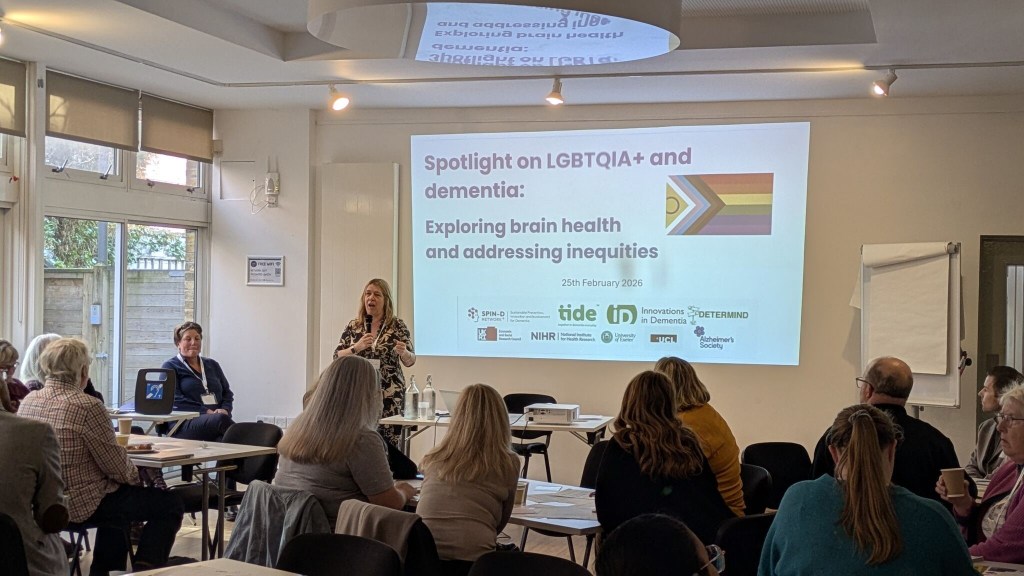
On 25 February 2026, the SPIN-Dementia Network Plus (SPIN-D), DETERMIND, Innovations in Dementia, and Together in Dementia Everyday (tide) brought together researchers, practitioners, community organisations, people living with dementia, carers, and funders for an in-person event in London exploring the connections between LGBTQIA+ experiences and dementia.
The event focused on brain health and addressing inequities in dementia research, care, and support. Participants with a wide range of backgrounds and levels of knowledge attended to share perspectives, learn from lived experiences, and explore how research and practice can better support LGBTQIA+ communities affected by dementia.
Learning, knowledge, and impact
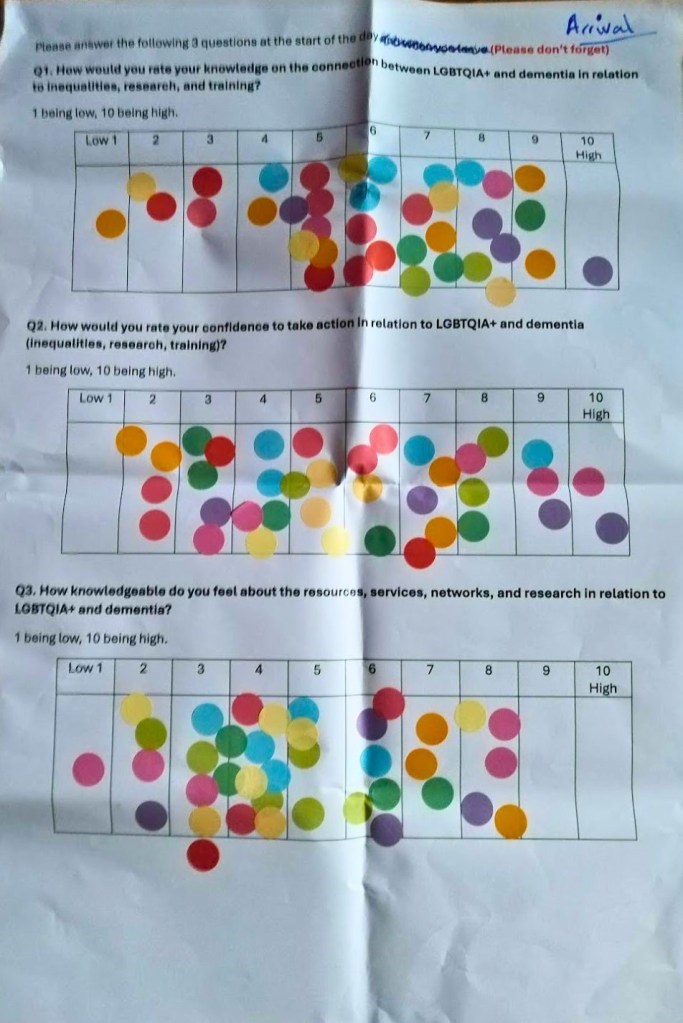
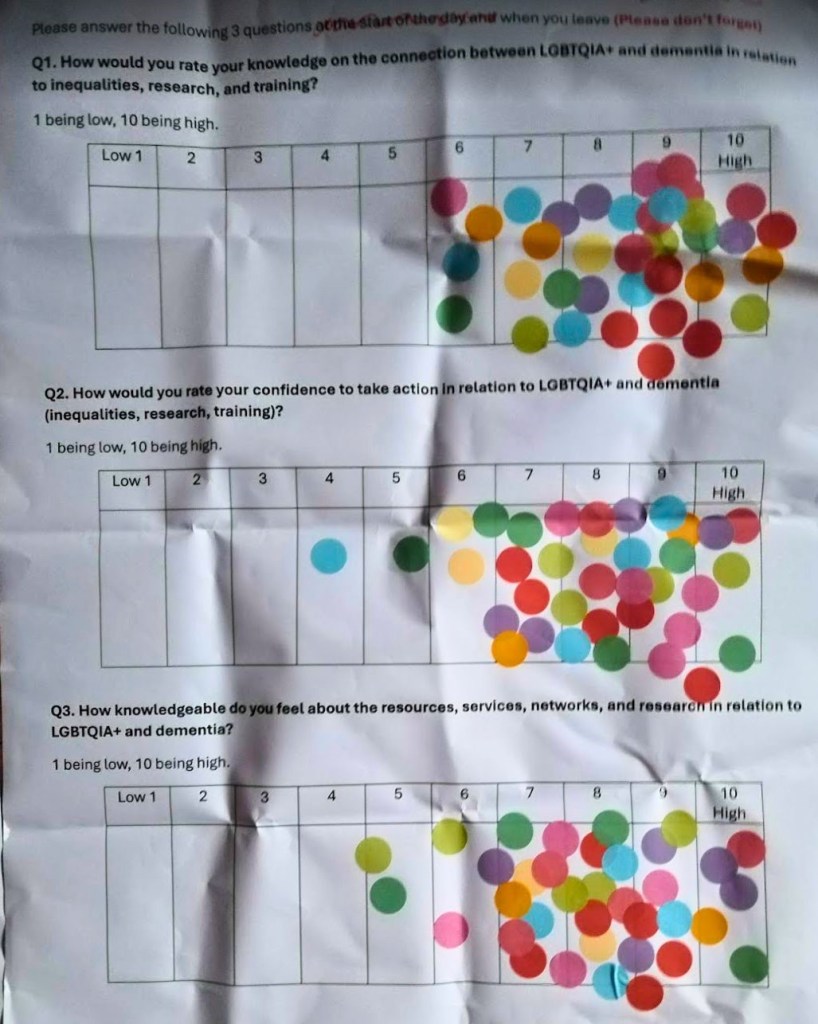
More than 40 attendees took part in the day. Evaluation data demonstrated substantial gains in knowledge, confidence, and awareness of resources.
Understanding of LGBTQIA+ and dementia
- 34% of participants rated their knowledge at 8 or higher (out of 10) on arrival
- Most frequent score on arrival: 5
- By departure, 72% rated their knowledge 8 or higher
- Most frequent score on departure: 9
Confidence to take action
- 25% rated confidence 8 or higher on arrival
- Most frequent score on arrival: 4
- By departure, 42% rated confidence 8 or higher
- Most frequent score on departure: 8
Knowledge of resources
- 12% rated knowledge 8 or higher on arrival
- Most frequent score on arrival: 3
- By departure, 65% rated knowledge 8 or higher
- Most frequent score on departure: 8
Programme highlights
The event opened with a welcome from Rachael Litherland (Innovations in Dementia), setting the tone for a collaborative day focused on learning and exchange.
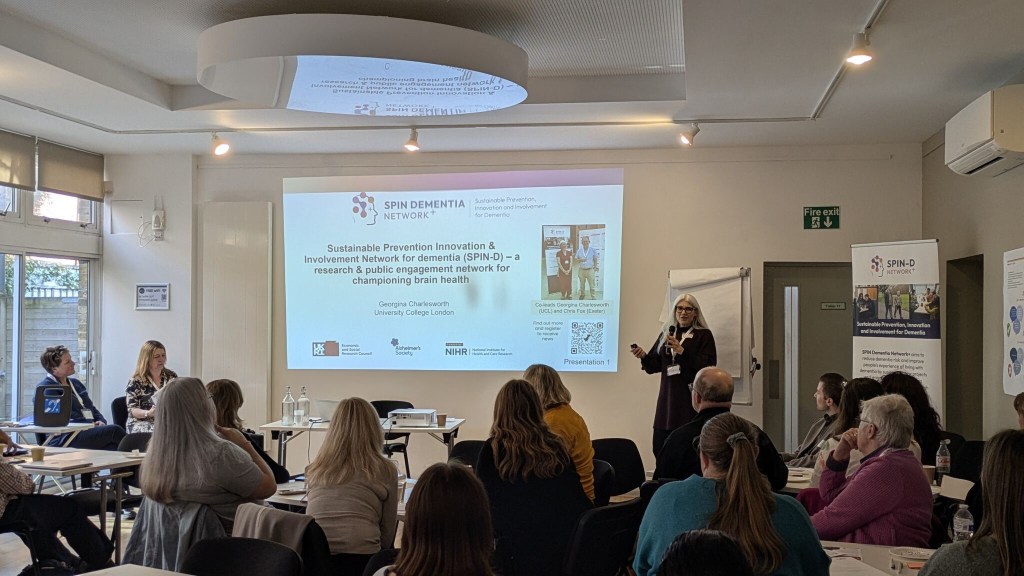
Professor Georgina Charlesworth introduced the SPIN-D Network Plus, outlining the network’s priorities around brain health and reducing inequalities in dementia research and care.
Dr Claudio Di Lorito presented statistics on the prevalence of dementia within LGBTQIA+ communities, highlighting the importance of improving evidence and representation in research.
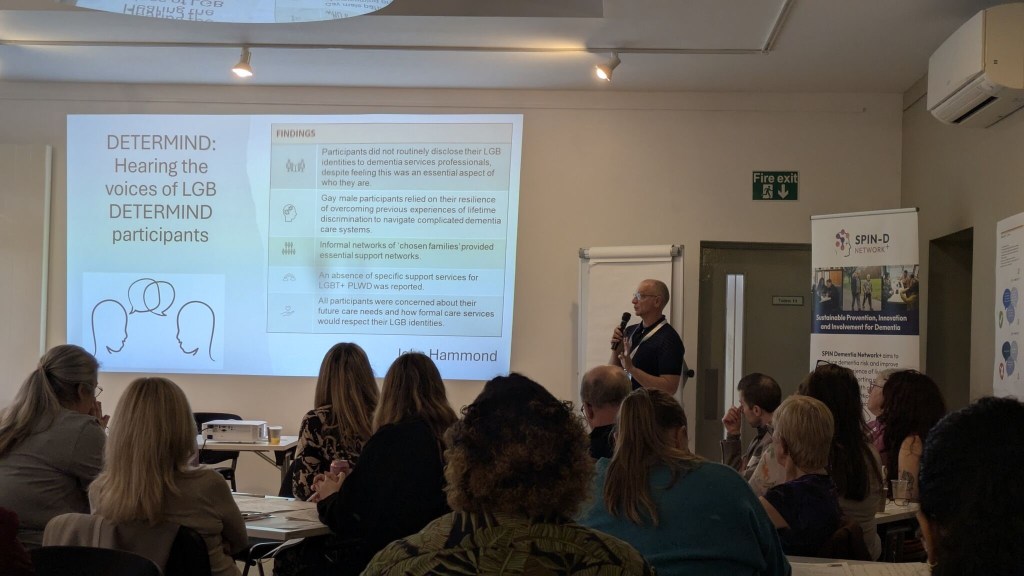
Dr Clare Hammerton and John Hammond from the Rainbow Café explored the historical and legal context shaping LGBTQIA+ experiences of dementia, emphasising how past discrimination and stigma continue to influence access to services and trust in institutions.
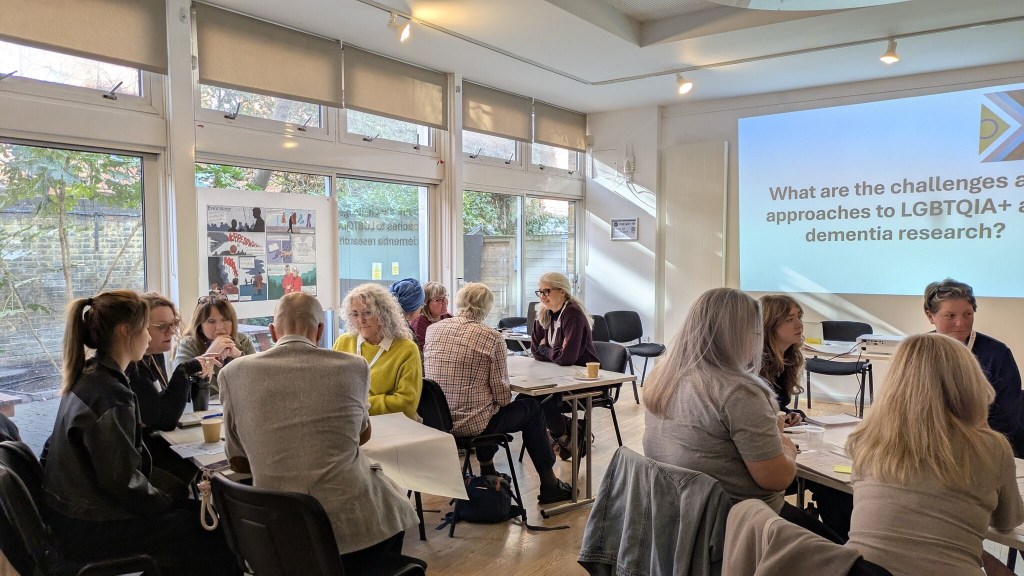
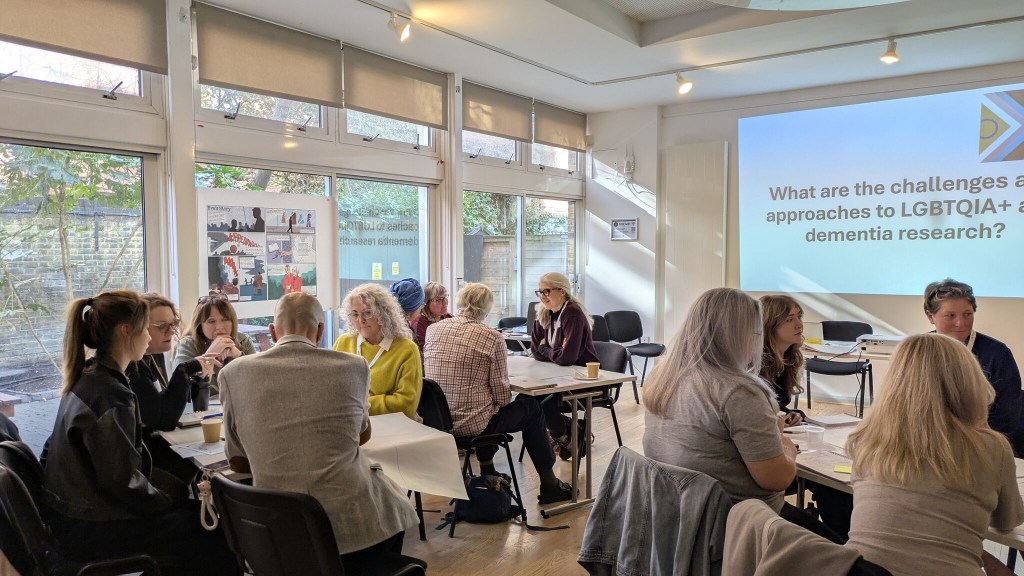
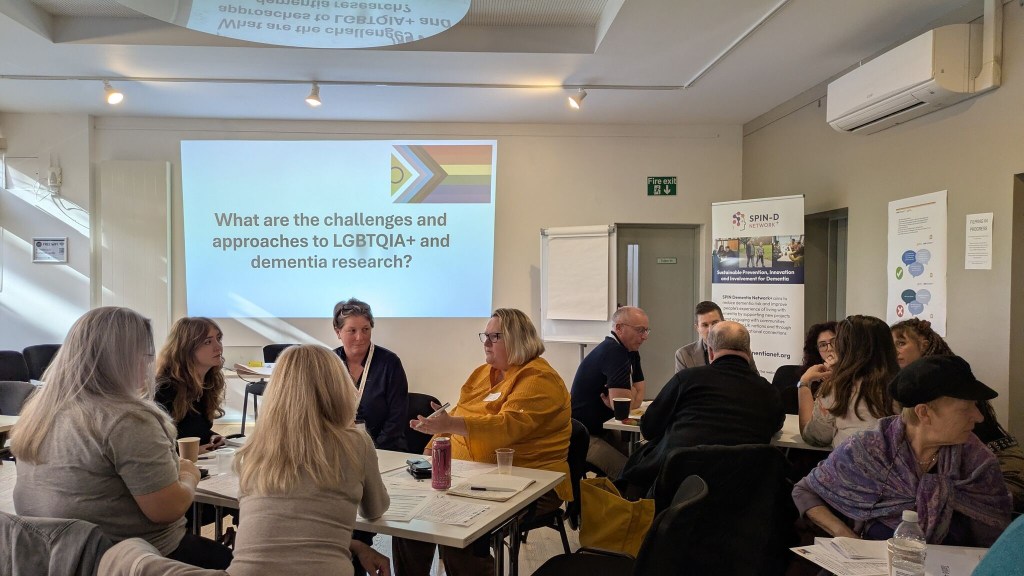
Participants then took part in facilitated discussions led by Rachael Litherland and Ruth Eley (tide), focusing on a key question:
What are the challenges and approaches to LGBTQIA+ and dementia research?
These conversations explored barriers to inclusion in research and care, as well as practical approaches to ensuring LGBTQIA+ voices and lived experiences shape future work.
Research spotlight: DETERMIND
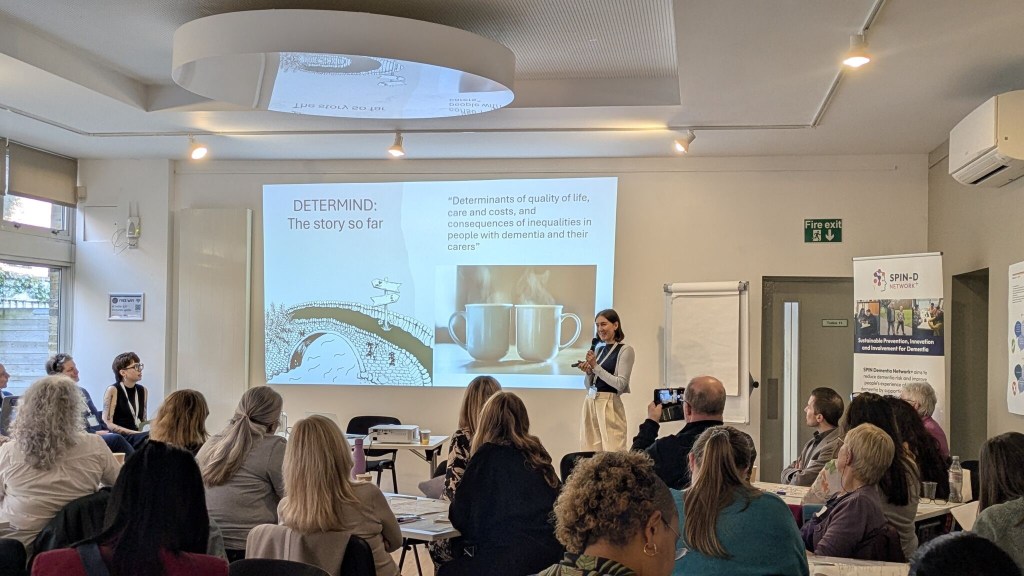
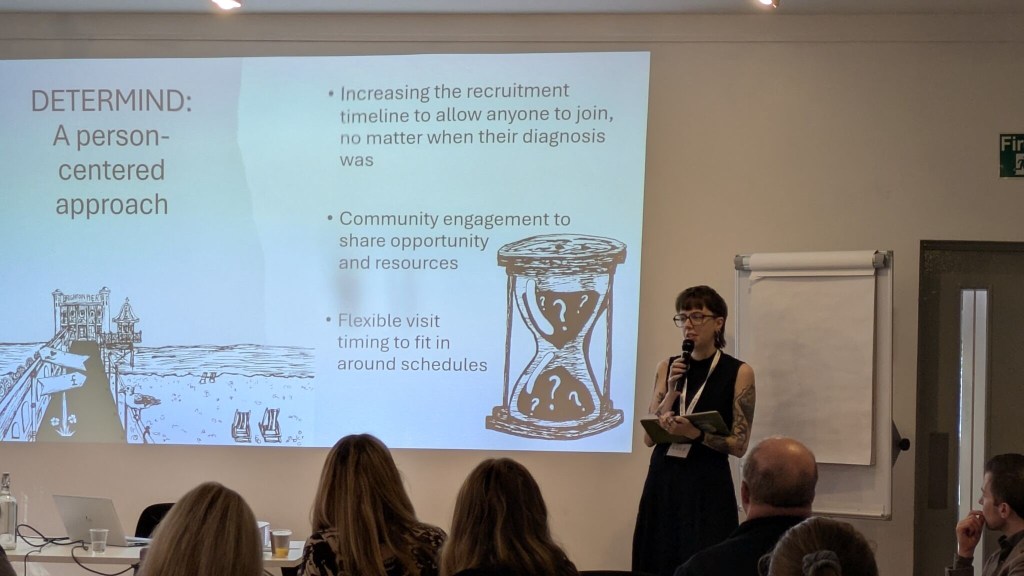
The event also highlighted the DETERMIND research study, including its Seldom Heard Groups sub-study.
The main DETERMIND study has shown that people from underserved communities can face barriers in accessing dementia care and support. The sub-study aims to better understand how these challenges can be addressed in order to improve inclusivity and maximise quality of life.
This work involves speaking directly with people living with dementia from underserved groups, including LGBTQIA+ and ethnic minority communities, to understand their lived experiences and inform future research, policy, and practice across the UK and internationally.
Building networks and identifying action
Throughout the day, participants worked together to:
- Share research insights and identify gaps in knowledge and practice
- Centre lived experiences of dementia in LGBTQIA+ communities
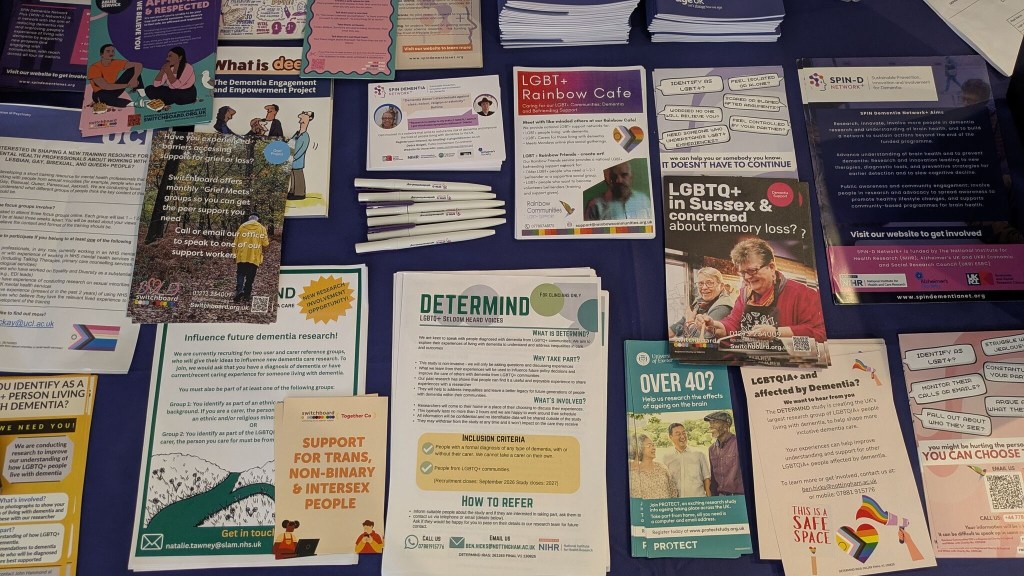
- Identify useful resources and areas for collaboration
- Explore practical actions and opportunities for impact
- Build networks across research, practice, and community organisations
A collaborative effort
The event was delivered by what many participants described as a “dream team”, led by Dr Clare Hammerton, alongside:
- Rachael Litherland (Innovations in Dementia)
- Chris Maddocks BEM
- Ruth Eley (tide)
- Luce Stewart (DETERMIND)
- Natalie Tawney (DETERMIND)
- John Hammond
- Claudio Di Lorito
The event was supported by the SPIN-D team:
- Professor Georgina Charlesworth
- Alice Rosalind Winters
- Emily Paremain
- Debra Gingell
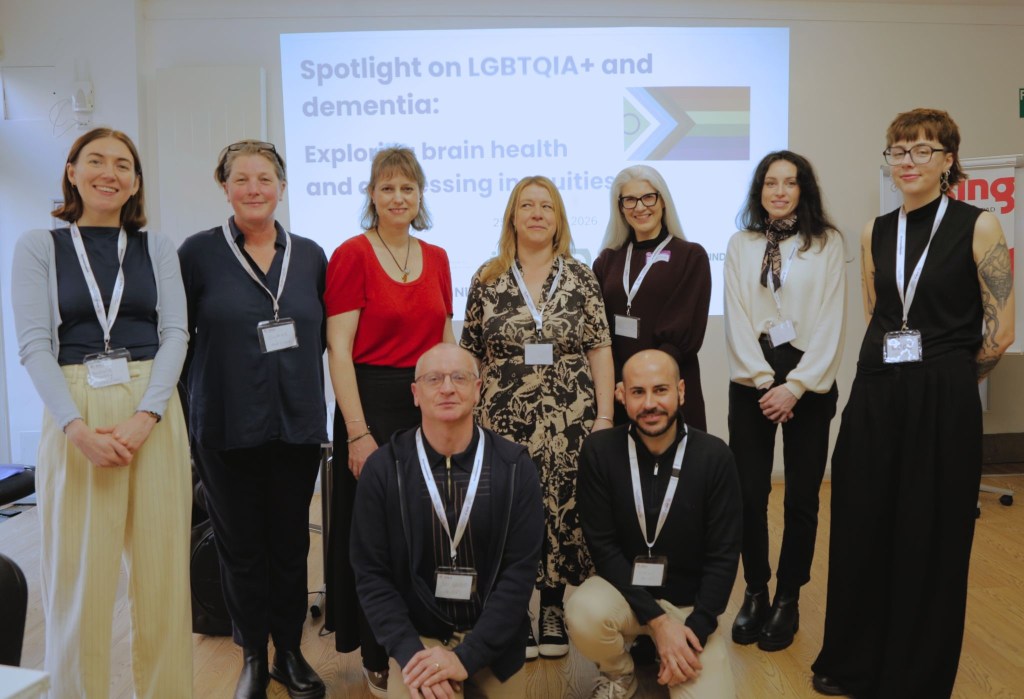
Additional contributions came from Patrick Kitana Ettenes and Sally Knocker, with Louise Orton documenting the event as filmmaker.
Emily Paremain, SPIN-D Programme Manager, also shared information about the SPIN-D Flexible Funding call, which is open until 31 March 2026.
Looking ahead
Reflecting on the day, Dr Clare Hammerton said:
“We are looking forward to seeing the ripple effect as those in the room take their knowledge and confidence forward into their work and daily lives and continue to gain ongoing support from the connections and networks they made.”
The event marked an important step in strengthening collaboration across research, practice, and community organisations working at the intersection of dementia and LGBTQIA+ inclusion.
Learn more
SPIN-D Network Plus – join the network and mailing list
https://spindementianet.org/join-our-network/
DETERMIND
https://determind.org.uk/
Together in Dementia Everyday (tide)
https://www.tide.uk.net/
Innovations in Dementia
https://www.innovationsindementia.org.uk/

 spindementianet.org