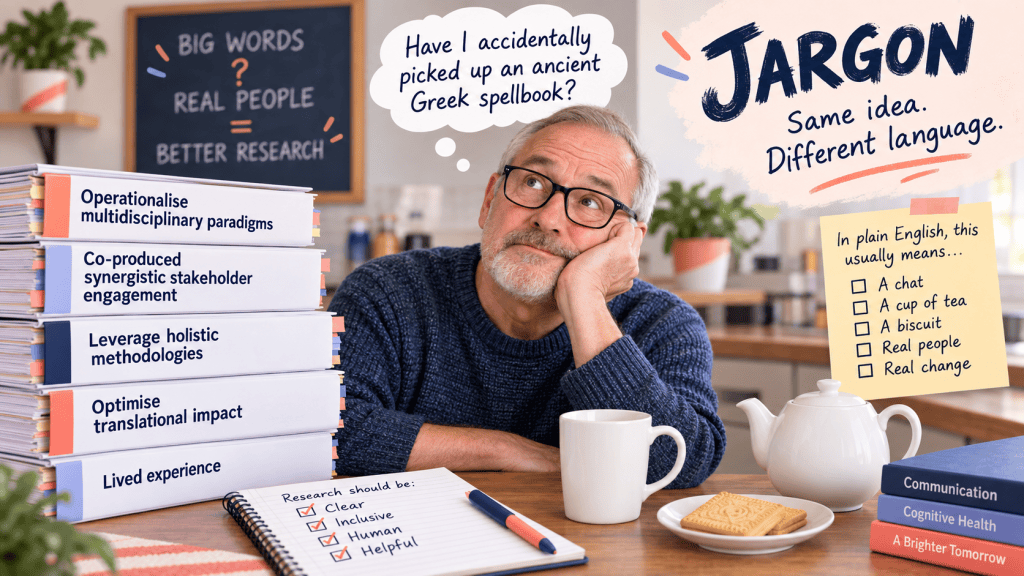
I was diagnosed with young onset dementia a few years back, which mostly means my brain now runs on dial-up internet while the rest of the world is on fibre optic. I can still put up a decent shelf, bake a cracking loaf of bread, and argue about who left the kitchen tap dripping. Yet, whenever I look at a research funding application, I suddenly wonder if I have accidentally picked up an ancient Greek spellbook.
These forms love to talk about involving people with “lived experience.” That’s me. I’m the lived experience. But before I can tell anyone what life is actually like, I have to decode fifty pages of impenetrable academic wallpaper.
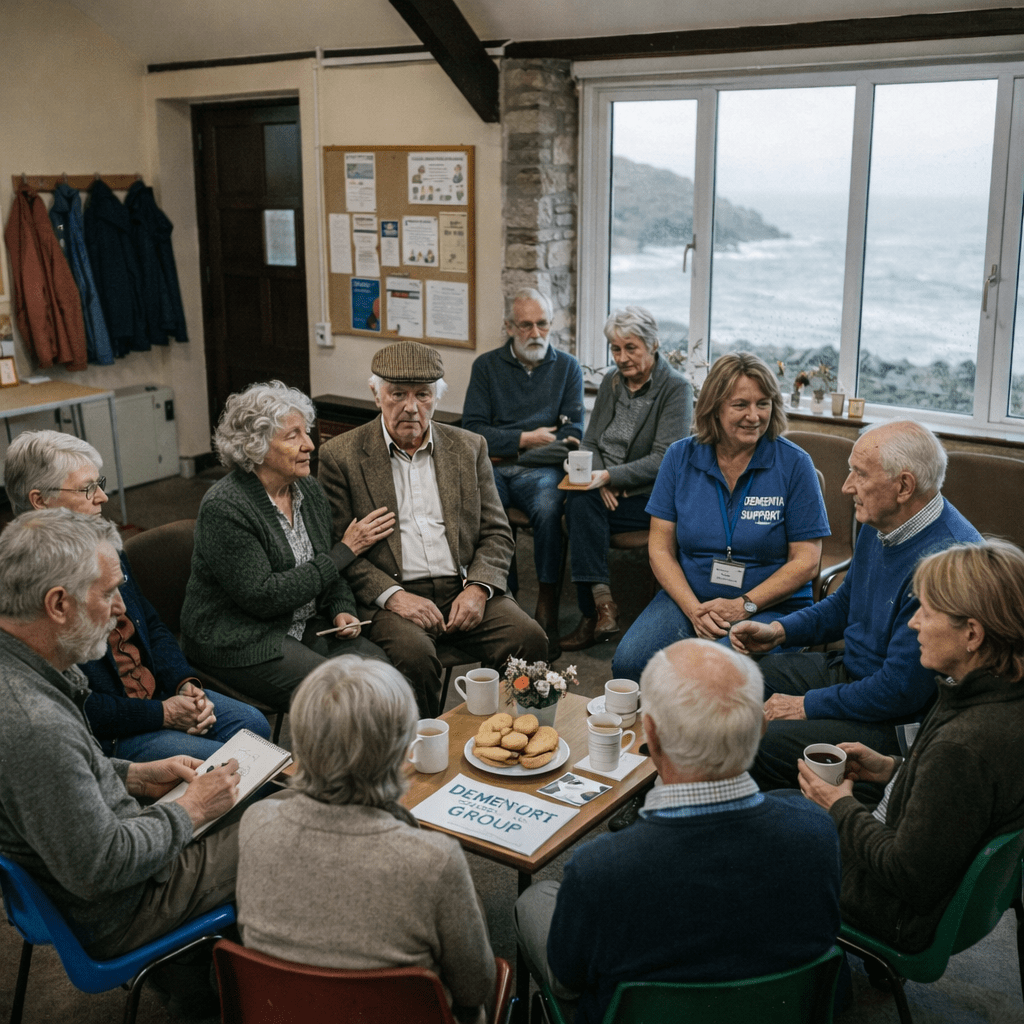
Apparently, researchers don’t just talk to people anymore. No, they “operationalise multidisciplinary paradigms to facilitate co-produced synergistic stakeholder engagement”. Translated into plain English, that usually means having a cup of tea and a biscuit in a drafty community centre while answering a few questions.
Why not just say that? I’d gladly turn up for a custard cream and a natter, but “synergistic engagement” makes me feel like I need a hard hat and a degree in astrophysics.
Then come the project aims. Nobody just wants to find out what helps folks like me stay independent. Instead, they want to “leverage holistic methodologies to optimise translational impact”. It sounds very grand, but my brain tends to glaze over somewhere around the third syllable of “methodologies.” If my cognitive battery is already running at thirty percent by mid-afternoon, wrestling with ten syllable words leaves me completely flat.
The irony is wonderful. These grant proposals are written to secure thousands of pounds to study communication and cognitive health, yet they are drafted in a dialect designed to confuse anyone outside a university faculty lounge.
Here is a radical thought for the funding panels: if you want to support genuine research that makes our daily lives better, try asking for applications written in words humans actually use. Tell us what you want to do, why it matters, and who is putting the kettle on. You might just find the science works a lot better when the people you are trying to help can actually read the script.

 spindementianet.org